 Classroom Management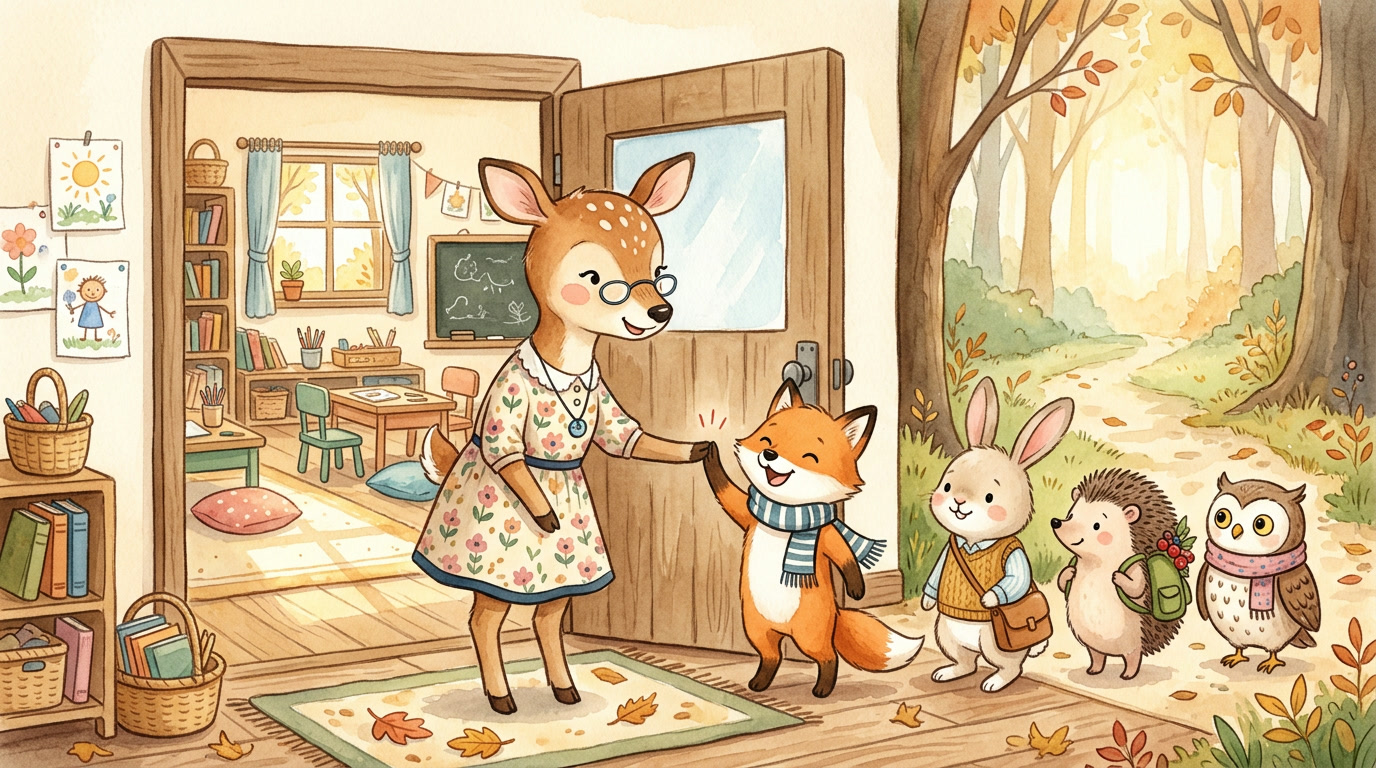
Here's a classroom management strategy that costs nothing, takes five seconds per student, requires no prep, no points, no printouts — and has some of the strongest research behind it of anything a teacher can do before the bell rings.
Stand at your door. Say each student's name. Say something warm. Tell them what to do first.
That's the whole strategy. Researchers call it positive greetings at the door, and the numbers it puts up are hard to believe for something so small.
What the research found
The landmark study came from Clayton Cook and colleagues (2018), who ran a randomized trial across ten middle school classrooms — 203 students in classes specifically chosen because off-task and disruptive behavior ran high. Teachers in the intervention group greeted each entering student with their name and a positive interaction, plus a quick reminder of what to do first.
The results: academic engaged time rose from about 59% to about 80% — roughly 20 percentage points — while control classrooms stayed flat. Disruptive behavior fell from about 14% of class time to about 4%. The researchers' back-of-the-envelope math is striking: those 20 percentage points translate to gaining about an hour of engagement over a five-hour instructional day, without adding a minute of teaching.
And this wasn't a fluke of one study. A decade earlier, Allday and Pakurar (2007) tested doorway greetings with individual middle schoolers who struggled at the start of class. When teachers greeted them by name at the door, on-task behavior in the first ten minutes jumped from a baseline average of 45% to 72%. A follow-up study by Allday and colleagues (2011) found that greetings also shortened how long it took students to actually start working — for every student they measured.
Why five seconds at the door changes fifty minutes of class
Two things are happening in that doorway moment, and both run through everything we know about behavior.
It front-loads connection. The greeting gives every student a positive interaction with you before any demand is made of them. That's a deposit in the relationship account — the same account that makes redirection land softly later. It's the fastest daily investment you can make in teacher-student relationships, and it feeds your 5:1 positive-to-corrective ratio before class even starts.
It's a precorrection. "Grab your journal, warm-up's on the board" — delivered at the threshold — cues the expected first behavior at the exact moment the student can act on it. That's textbook precorrection: prompting the right behavior before the trigger moment instead of correcting the wrong one after. The start of class is one of the most predictable trouble spots in any schedule, and the greeting gets there first.
The three-part greeting
The version tested in the research has three ingredients. Keep all three and keep it under ten seconds.
1. The name
Names matter. Not "hey bud" — the actual name, pronounced correctly. Being known by name is the smallest unit of belonging, and it's the part students notice most.
2. The connection
One genuine beat of warmth: a smile, a fist bump, "good to see you," a one-line follow-up on yesterday's game. Let students pick their greeting if that helps — wave, high-five, or just a nod for the kid who'd rather not be perceived before 8 a.m. Genuine beats elaborate. This is the doorway version of catching kids being good.
3. The direction
Close with what to do first: "Warm-up's on the board." "Sit with your lab group today." Specific, positive, actionable. In the Cook study, teachers also used the doorway to quietly reconnect with students who'd had a rough previous day — a private reset before the class watches.
Making it stick
Be there. The strategy lives or dies on you being at the door during the passing period. Build it into your own routine the way you'd build a student routine.
Prioritize when you can't do it all. Big class, short passing period? Greet who you can, but never miss the two or three students who find the start of class hardest — they're exactly who the individual studies targeted, and who benefited most.
Follow through inside the room. A greeting cues the first behavior; acknowledging it closes the loop. When the student who usually takes ten minutes to settle is working within two, notice it. A quiet, positive-only points tap in Chou Chou Teach makes that acknowledgment take two seconds, with no public callout — the greeting starts the loop at the door, and the recognition finishes it at the desk.
It pairs naturally with the rest of your opening routine, too — a calm entrance feeds directly into the calm transitions that keep the first ten minutes smooth.
Start tomorrow
You don't need a plan, a printout, or permission. Tomorrow, stand in your doorway and give every student who walks in a name, a moment of warmth, and a first step. The research says you'll buy back engagement all period from an investment of five seconds per kid — the cheapest hour of instructional time you'll ever recover.
For more strategies like this one, browse the Classroom Management topic hub.
References
- Cook, C. R., Fiat, A., Larson, M., Daikos, C., Slemrod, T., Holland, E. A., Thayer, A. J., & Renshaw, T. (2018). Positive greetings at the door: Evaluation of a low-cost, high-yield proactive classroom management strategy. Journal of Positive Behavior Interventions, 20(3), 149–159.
- Allday, R. A., & Pakurar, K. (2007). Effects of teacher greetings on student on-task behavior. Journal of Applied Behavior Analysis, 40(2), 317–320.
- Allday, R. A., Bush, M., Ticknor, N., & Walker, L. (2011). Using teacher greetings to increase speed to task engagement. Journal of Applied Behavior Analysis, 44(2), 393–396.
Frequently asked questions
Does greeting students at the door actually work?
What should I say when greeting students at the door?
Do I have to greet every student every day?
Does greeting students work in middle and high school?
Why does such a small thing change behavior?

Bec
Teacher & Chou Chou Educator
Bec is a fifth grade teacher who lives and breathes positive classrooms. She writes the Chou Chou Learn library to help fellow teachers catch their kids being good.