 Positive Reinforcement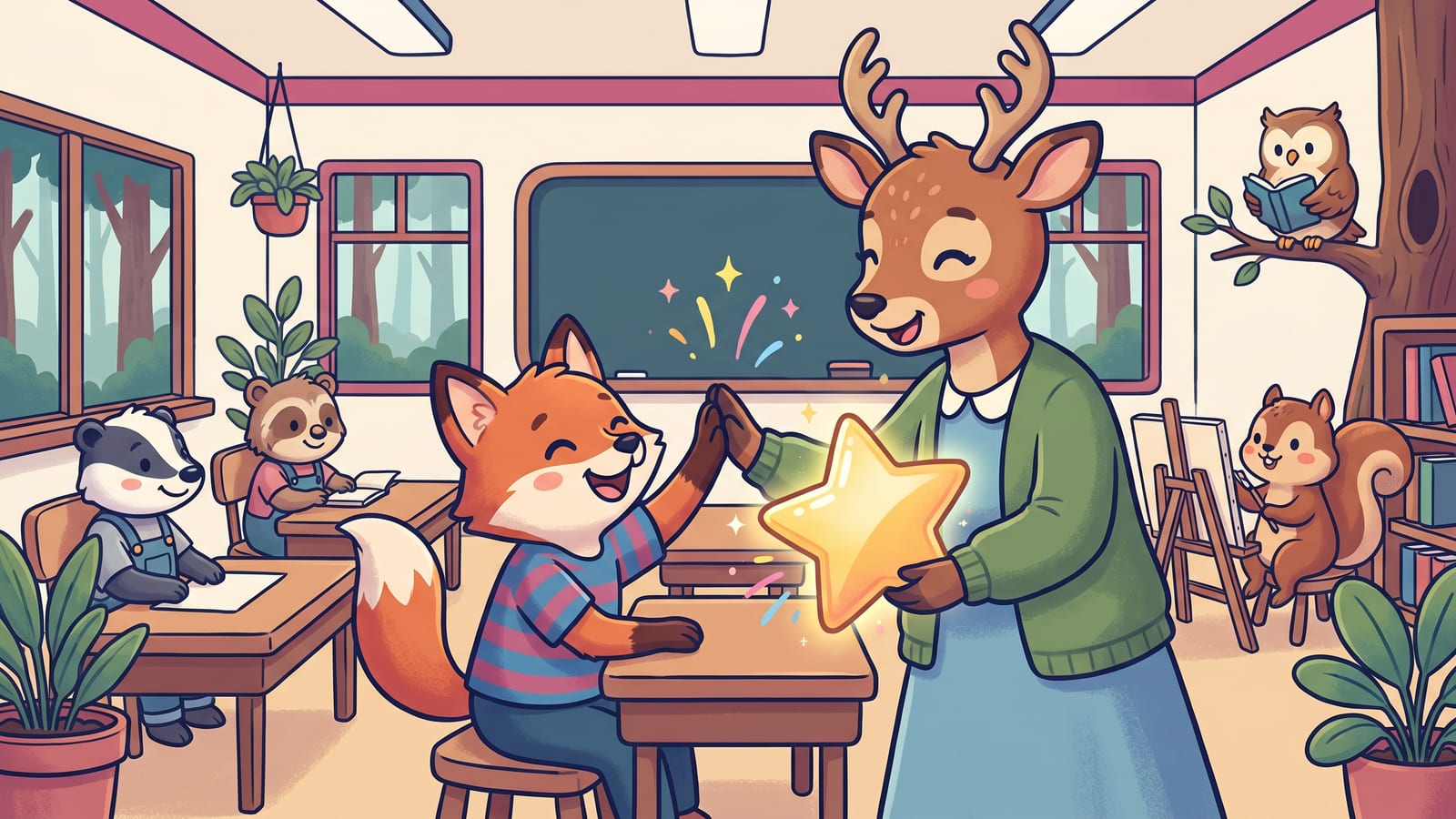
Ask any teacher what changes a classroom fastest, and the honest answer is rarely a new seating chart or a sterner voice. It's attention — specifically, where you choose to point it. Positive reinforcement is the practice of deliberately pointing your attention at the behavior you want to see again.
This guide breaks down what positive reinforcement actually is, why decades of research say it works, and exactly how to use it tomorrow morning.
What is positive reinforcement?
Positive reinforcement means adding something pleasant immediately after a behavior, which makes that behavior more likely to happen again. The "positive" doesn't mean "nice" — in behavioral science it means adding something (as opposed to taking something away). The pleasant thing might be a smile, a specific word of praise, a point, or a moment of recognition.
The mechanism is simple:
- A student does something you want to encourage — raises a hand, helps a classmate, keeps trying after a mistake.
- You add something positive right away.
- The brain links the behavior to a good feeling, and the behavior strengthens.
The key word is immediately. Reinforcement that arrives a day later, on a report card, has almost no power to shape the moment.
Why positive reinforcement beats punishment
Punishment can stop a behavior in the short term, but it comes with costs: anxiety, damaged relationships, and a child who learns to avoid getting caught rather than to do the right thing. Reinforcement does something different — it teaches kids what to do, and it makes the classroom feel safe.
Three things happen when you lead with reinforcement:
- Confidence grows. Celebrating effort helps every student believe they can improve.
- Relationships strengthen. Looking for the good changes the entire feel of a room.
- Self-esteem is protected. There are no call-outs, no public shaming, no red marks.
This is exactly why PBIS — the school-wide framework used in tens of thousands of schools — puts positive reinforcement at its foundation.
Positive reinforcement vs. bribery
The most common worry teachers have is, "Isn't this just bribing kids?" It's a fair question, and the difference matters.
| Bribery | Reinforcement |
|---|---|
| Offered before the behavior to stop a problem | Given after the behavior to recognize it |
| "If you stop yelling, I'll give you a treat." | "You waited your turn so patiently — nice." |
| Rewards the wrong moment | Rewards the right moment |
Bribery negotiates with misbehavior. Reinforcement notices the good that's already there. Keep your timing on the right side of the behavior and you'll stay out of bribery territory.
How to give praise that actually works
Generic praise ("Good job!") fades fast. Effective reinforcement is specific, immediate, and genuine.
Be specific
Name the behavior, not the child's character. "You read that whole page even when it got tricky" tells a student exactly what to do again. "You're so smart" doesn't.
Be immediate
The closer the praise is to the behavior, the stronger the link. A point or a word in the moment beats a note home hours later.
Praise the effort, not just the outcome
Recognizing effort and strategy ("You tried three different ways") builds a growth mindset. Recognizing only results teaches kids to avoid hard things.
Easy ways to reinforce all day
You don't need a complicated system. Start with these:
- Catch them being good. Narrate the behavior you want: "I see three tables already cleaned up."
- Use a points system that only goes up. Points for effort, kindness, and focus — never taken away in front of the class.
- Make it visible. A quick avatar cheer or a class tally turns a private moment into a shared celebration.
- Spread it around. Make sure your quiet, consistent kids get noticed too, not just the loudest.
A tool like Chou Chou Teach is built entirely around this idea: points only ever go up, every student picks a creature to cheer for, and there's no public shaming built into the design.
Start small, stay consistent
You don't have to overhaul your classroom this week. Pick one routine — the morning entry, clean-up time, transitions — and flood it with specific, immediate praise for a week. Consistency is what turns a strategy into a culture.
Want to go deeper? Explore student motivation next, or learn how the PBIS framework puts all of this together school-wide.
Frequently asked questions
What is positive reinforcement in the classroom?
Is positive reinforcement just bribery?
Why is positive reinforcement better than punishment?
How do I give praise that actually works?
How do I start using positive reinforcement without a big system?

Bec
Teacher & Chou Chou Educator
Bec is a fifth grade teacher who lives and breathes positive classrooms. She writes the Chou Chou Learn library to help fellow teachers catch their kids being good.