 Classroom Management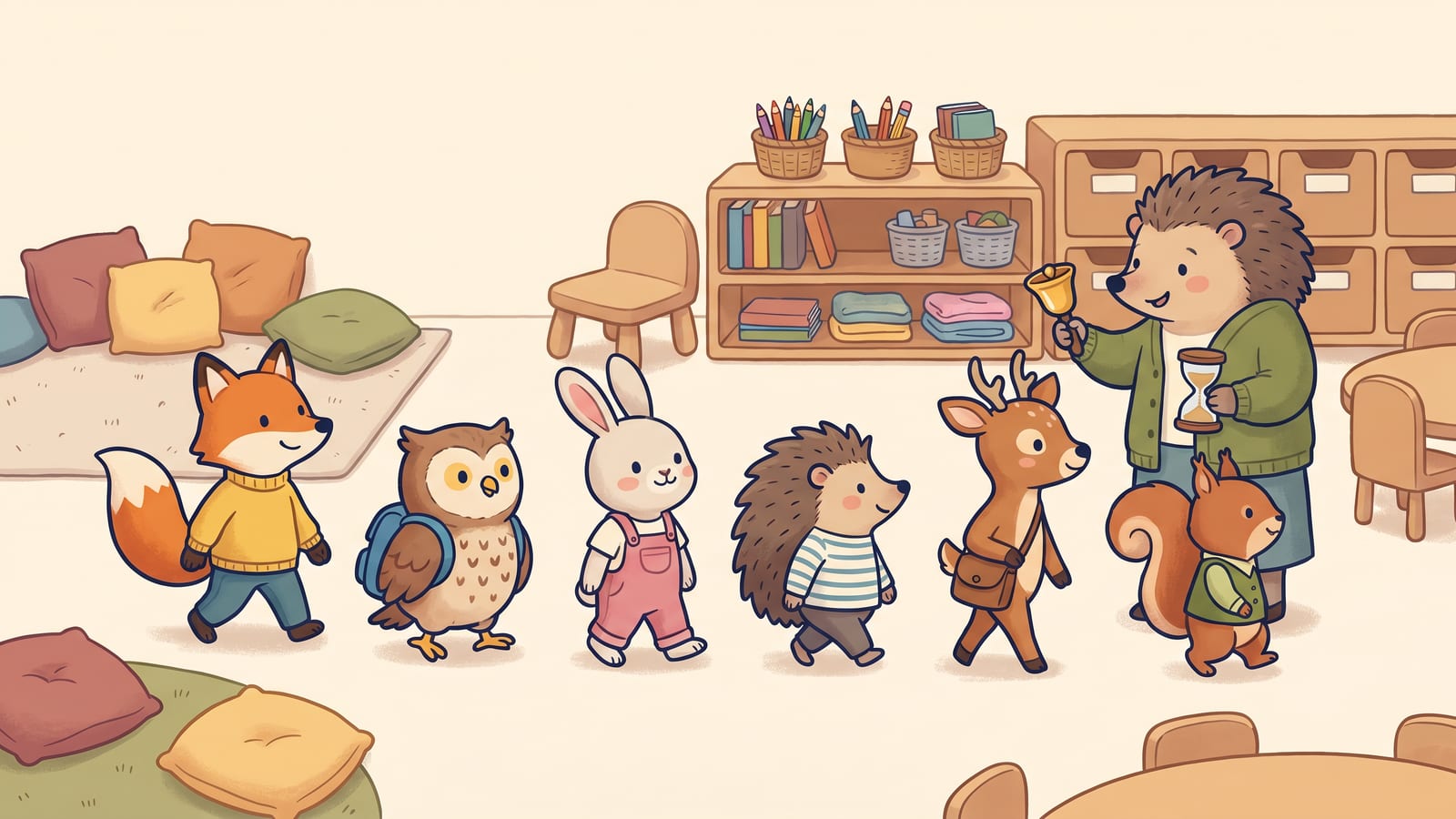
Watch a tough classroom moment closely and you'll often notice it didn't happen during the lesson — it happened in the thirty seconds between lessons. Lining up, switching subjects, packing up: these in-between moments are where the noise, the wandering, and the conflicts cluster.
The good news is that transitions are a procedure, and procedures can be taught. Here's how to make yours calm.
Why transitions cause trouble
Transitions are unstructured by nature. For a few seconds, students don't know exactly what to do, where to be, or how long they have. That uncertainty is a vacuum, and behavior rushes in to fill it.
Fix the uncertainty and you fix most of the behavior. Every strategy below does one thing: it makes the next 60 seconds predictable.
Build a predictable transition routine
Use a consistent signal
Pick one attention signal and use it every single time — a chime, a call-and-response, a hand raise. The signal means "stop, look, listen for the next instruction." When it never changes, students respond on autopilot.
Give the steps before you release
State the sequence before anyone moves: "When I say go, push in your chair, put your folder in the blue bin, and meet me on the carpet." Releasing students before they know the steps guarantees a scramble.
Put a timer on it
A visible countdown turns a vague "hurry up" into a shared, beat-the-clock game. Timers externalize the pressure — it's not you nagging, it's the clock. A simple timer or stopwatch tool on the board does the trick.
Name the destination and the volume
Tell students both where to go and how loud to be getting there: "Voices off, walking feet, to your reading spot." Two clear variables, no guessing.
Reinforce the transitions you want
This is where positive reinforcement does the heavy lifting. It's far faster to catch smooth transitions than to correct messy ones.
- Narrate the good: "Table 2 is already seated and ready."
- Award points for the behavior, not the speed: quiet, safe, and ready beats fastest.
- Be specific: "You put everything away and helped Sam find his book — thank you."
Because the recognition is immediate, students learn that calm transitions get noticed. That's the whole game.
Practice like it's a fire drill
In the first weeks of the year, practice transitions on purpose. Run the line-up, debrief what went well, and run it again. Five minutes of deliberate practice now saves hundreds of chaotic minutes later. Once a routine is automatic, it survives substitute days, assemblies, and the week before a holiday.
A simple transition checklist
Keep this taped to your desk:
- Signal for attention.
- State the steps and the destination.
- Set a timer if movement is involved.
- Release the class.
- Reinforce the students who got it right.
Master your transitions and the rest of your day gets quieter. From here, see how the PBIS framework builds these routines into a whole-school system, or build the student motivation that makes kids want to get it right.
Frequently asked questions
Why do classroom transitions cause behavior problems?
How do I make classroom transitions calmer?
Should I correct or reinforce transitions?
How do I teach a transition routine?
What is a simple checklist for classroom transitions?

Bec
Teacher & Chou Chou Educator
Bec is a fifth grade teacher who lives and breathes positive classrooms. She writes the Chou Chou Learn library to help fellow teachers catch their kids being good.