 PBIS
PBIS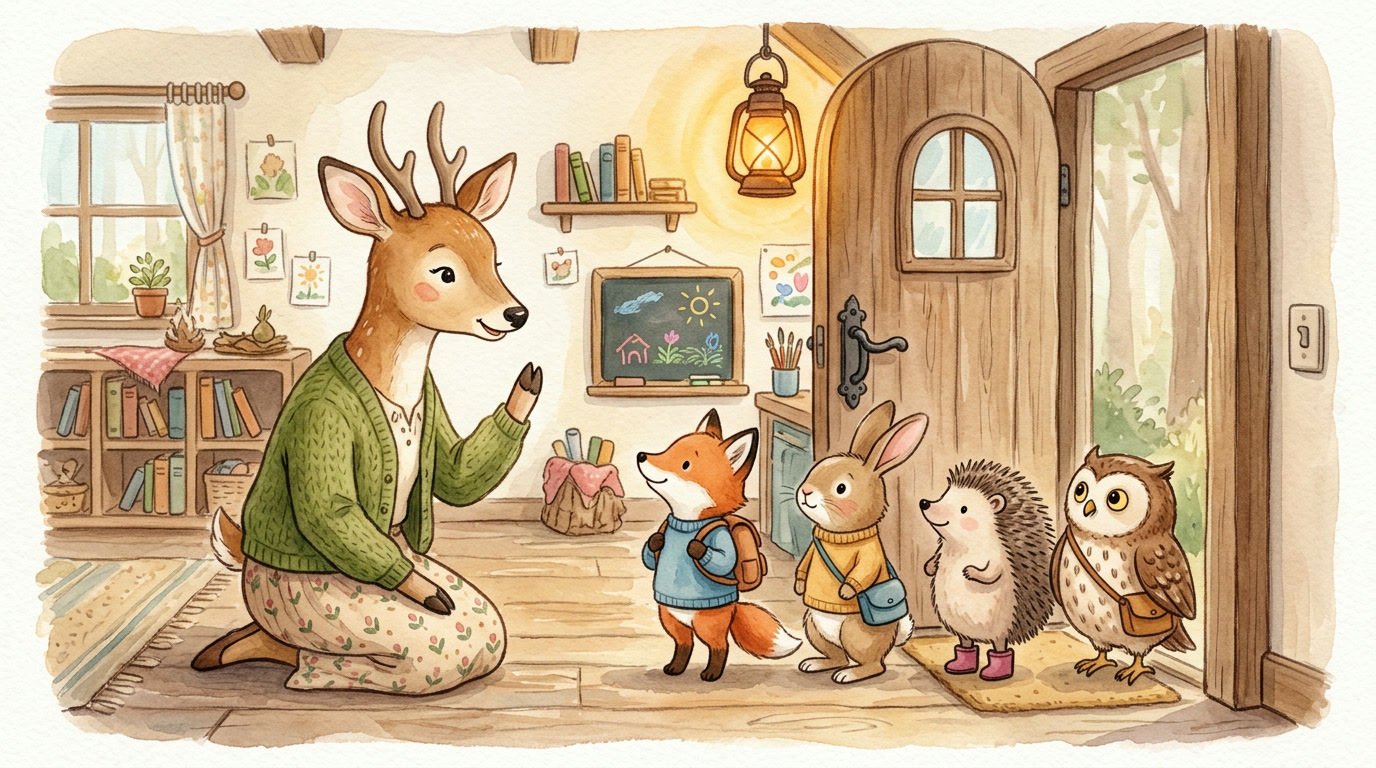
Tier 3 · Intensive
Individualized plans for a few students
Tier 2 · Targeted
Small-group, structured support for some
Tier 1 · Universal
Positive supports for all students
Think about the last behavior problem in your room. Was it a surprise? Probably not. Most classroom misbehavior is astonishingly predictable — the same three minutes of lining up, the same scramble after lunch, the same student hitting the same wall at the start of independent work. We can usually see it coming.
Precorrection is the PBIS strategy built on exactly that fact: if you can predict the moment, you can get there first. It's a ten-second, positively worded prompt of the expected behavior, delivered before the trigger moment instead of a correction delivered after. And for a strategy this small, it has an unusually solid research trail.
Where precorrection comes from
The idea was formalized by Geoffrey Colvin, George Sugai, and Bill Patching (1993), who made an argument that still feels fresh: we should treat behavior errors the way we treat academic errors. When a student misreads a word, we don't issue a consequence — we re-teach, prompt, and give them another chance to practice. Their framework applies the same logic to behavior: identify the context where errors predictably happen, teach and prompt the expected behavior before that context, and reinforce students when they get it right.
That's the heart of it. A precorrection isn't a warning, and it isn't a threat. It's instruction, delivered at the moment it's most likely to work — right before the student needs it.
If you're new to the framework this strategy lives inside, start with our plain-English guide to PBIS. Precorrection sits squarely in Tier 1, alongside the other classroom practices that do the heavy lifting.
What the research says
The foundational field test came from Colvin, Sugai, Good, and Lee (1997), who trained staff at an elementary school to use precorrection and active supervision — moving, scanning, and interacting — during the day's messiest moments: entering the building, the cafeteria, and dismissal. As staff prompts went up, student problem behavior in those transition settings went down.
Richard De Pry and George Sugai (2002) then brought the package into a sixth-grade general education classroom. With precorrection, active supervision, and a simple daily review of the data, minor behavioral incidents — the not-following-directions, off-task drumbeat that eats instructional time — decreased, and the effects held while the intervention stayed in place.
The wider evidence base is summarized by Robin Parks Ennis and colleagues (2017), who ran a systematic review of precorrection research across PK–12 settings. Every study they reviewed reported positive effects on student behavior, spanning classrooms, hallways, playgrounds, and cafeterias, whole classes and individual students. For a free strategy that takes seconds to use, that's a remarkable batting average.
A three-step precorrection routine
The full Colvin framework has seven steps, but the classroom version compresses to three.
1. Find your predictable moments
You already know them. Transitions top most teachers' lists — if that's yours, our guide to calm classroom transitions pairs perfectly with this one. Other classics: entering the room, starting independent work, packing up, lining up, and any moment involving waiting. Pick one or two. Precorrection works because it's targeted, not constant.
2. Prompt the expected behavior — briefly, positively, just before
Ten seconds before the moment, tell students exactly what doing it right looks like: "We're heading to the carpet — walking feet, find your spot, eyes on me." Keep it short, keep it neutral, and word it as the behavior you want, not the one you're bracing for. "Show me a level-zero line" beats "Don't you dare shout in the hallway" every time — one is teaching, the other is a dare.
For the one or two students who find that moment hardest, add a quiet, private version: a name, a smile, one sentence. That individual precorrection is the same move a check-in/check-out routine makes at the start of each day, just scaled to a single moment.
3. Follow through with your feet and your feedback
The research consistently pairs precorrection with active supervision: once you've given the prompt, move, scan, and interact while the moment unfolds. Then close the loop by acknowledging the students who did what you named — specifically and sincerely, the way the science of praise recommends. A precorrection that's never followed by acknowledgment fades; one that reliably leads to recognition becomes a habit loop.
This is where a positive-only points system like Chou Chou Teach slots in naturally: you name the expectation on the way to the door, and when the line is calm, two taps acknowledge it on the spot. Prompt, behavior, recognition — the whole cycle inside one transition, with no public tally of who got it wrong.
Why it works
Precorrection succeeds for an unglamorous reason: it moves your effort from the expensive side of behavior to the cheap side. Correcting misbehavior costs instructional time, relationship capital, and everyone's mood — and it happens after the disruption already spread. A prompt costs ten seconds and happens before there's anything to fix. It's the same prevention-over-reaction logic that runs through all of Tier 1, from greeting students at the door to keeping your positive-to-corrective ratio healthy — and every misbehavior that never happens is one less negative interaction pulling that ratio down.
Start tomorrow
Pick your single most predictable trouble spot. Write one sentence that names the expected behavior in positive words. Say it ten seconds before the moment, watch the moment actively, and acknowledge the students who deliver. That's the entire strategy — and thirty years of research says those ten seconds are some of the best you'll spend all day.
For more strategies from the same playbook, browse the PBIS topic hub.
References
- Colvin, G., Sugai, G., & Patching, B. (1993). Precorrection: An instructional approach for managing predictable problem behaviors. Intervention in School and Clinic, 28(3), 143–150.
- Colvin, G., Sugai, G., Good, R. H., & Lee, Y. (1997). Using active supervision and precorrection to improve transition behaviors in an elementary school. School Psychology Quarterly, 12(4), 344–363.
- De Pry, R. L., & Sugai, G. (2002). The effect of active supervision and pre-correction on minor behavioral incidents in a sixth grade general education classroom. Journal of Behavioral Education, 11(4), 255–267.
- Ennis, R. P., Royer, D. J., Lane, K. L., & Griffith, C. E. (2017). A systematic review of precorrection in PK-12 settings. Education and Treatment of Children, 40(4), 465–495.
Frequently asked questions
What is precorrection in the classroom?
Is precorrection evidence-based?
What's the difference between a precorrection and a warning?
When should I use precorrection?
Does precorrection work for the whole class or just individual students?

Bec
Teacher & Chou Chou Educator
Bec is a fifth grade teacher who lives and breathes positive classrooms. She writes the Chou Chou Learn library to help fellow teachers catch their kids being good.