 Positive Reinforcement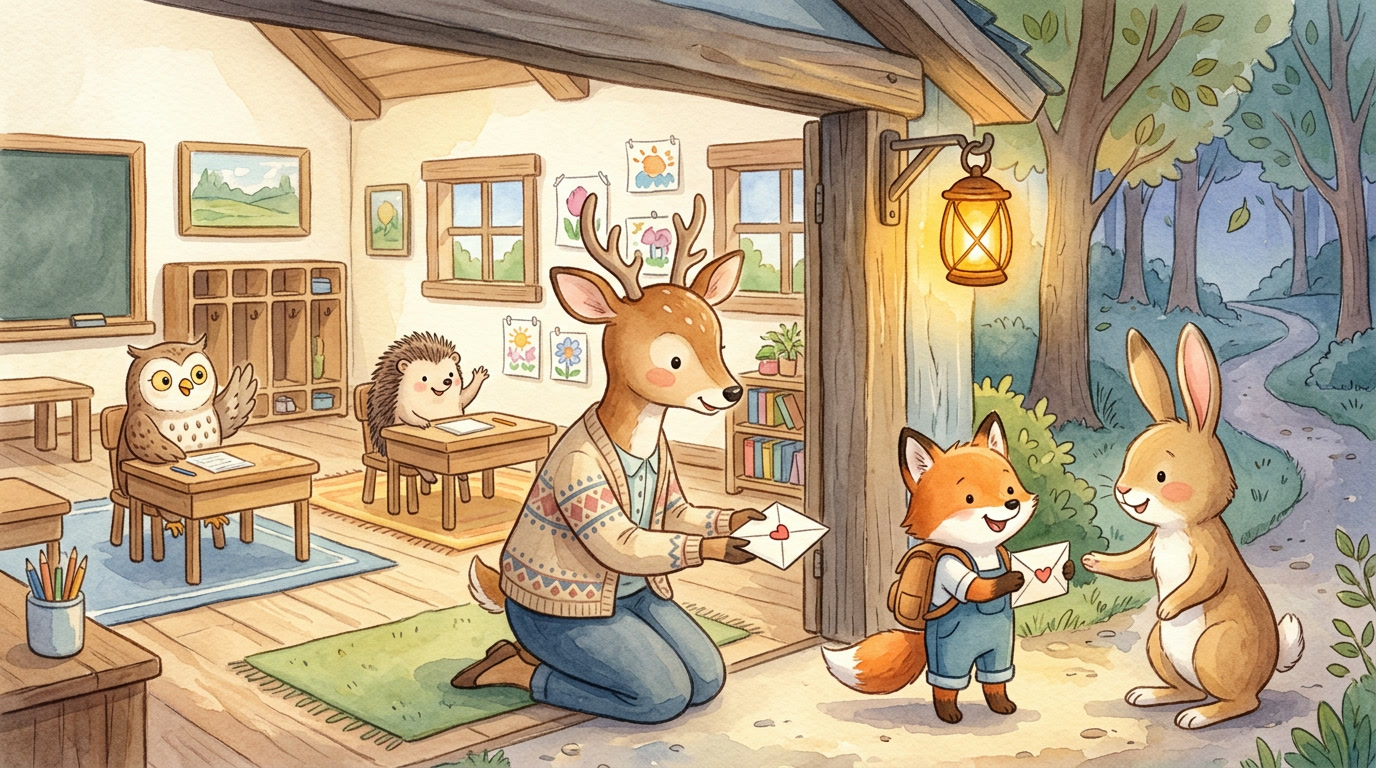
Think about the last five times your school contacted a family. For a lot of students — usually the ones who struggle most — every one of those contacts was bad news. So when the phone shows the school's number, families brace. Kids brace. And the one adult partnership that could actually change a student's trajectory starts every conversation on the defensive.
Now flip it. A two-sentence note in a backpack. A ninety-second phone call about something that went right. It sounds too small to matter — which is why it's worth knowing that this particular small thing has been put through randomized trials, and it holds up remarkably well.
What the research found
Matthew Kraft and Shaun Dougherty (2013) ran a randomized experiment during a mandatory summer program, where 6th and 9th graders' families received a daily phone call and a short written message from teachers. The results were striking for something so simple: the odds that students completed their homework rose by 40%, teachers needed to redirect students' attention 25% less often, and class participation climbed 15% — with 6th graders' participation jumping by nearly half.
Two years later, Kraft and Todd Rogers (2015) tested an even lighter touch: one individualized sentence per week sent to families of high schoolers in a credit recovery program. The share of students who failed to earn course credit fell from 15.8% to 9.3% — a 41% reduction — mostly because fewer students dropped out. The estimated cost per additional credit earned was less than a tenth of what the district normally spent.
One nuance worth taking seriously: in that study, the messages that helped most weren't the purely cheerful ones. Sentences that named something specific the student could do or improve outperformed generic positivity. The lesson isn't "only send praise" — it's that families act on information, not vibes. A real observation, warmly delivered, is the active ingredient.
Praise notes work at school, too
The note itself doesn't have to travel home to matter. In a middle school study, Nelson, Young, Young, and Cox (2010) tracked teacher-written praise notes recognizing specific student behaviors and found that as the number of notes went up, office discipline referrals went down. And in an elementary school, Caldarella, Christensen, Young, and Densley (2011) found praise notes significantly cut tardiness among chronically late students — with an average of about one note per week doing the job.
That dosage finding should be a relief. Nobody is asking you to become a greeting-card factory. A handful of genuine, specific notes each week — some to students, some to families — is squarely inside the range the research studied.
Why such a small thing moves behavior
Three reinforcement mechanisms stack on top of each other:
- The student gets recognized twice. Once when you write or call, and again at home when the family brings it up. That second dose — a parent saying "your teacher told me what you did" — is praise delivered by the most important audience a child has.
- The family's picture of school changes. When the first contact is positive, you stop being the person who calls with problems and become an ally who notices their kid. Later, when you do need to raise a concern, you're two people who both like this child solving a problem together.
- Your own attention re-aims. To write the note, you have to catch the behavior. Teachers who commit to daily positive contacts start scanning for note-worthy moments all day — which quietly tilts your whole positive-to-negative interaction ratio in the right direction.
A routine that survives October
The failure mode of positive notes isn't skepticism — it's that the habit dies three weeks in. Here's a version teachers actually sustain:
Two a day, off a roster
Keep your class list somewhere visible and work down it: two positive contacts a day, checking off each name. A class of 25 gets covered in under three weeks, then you start again. The roster matters because without it, the same easy-to-praise students collect all the notes while the kids who most need one stay invisible.
Make it specific or don't send it
"Great week!" tells a family nothing and reads as a form letter. One concrete sentence does the work: "Today Deshawn noticed a classmate stuck on the science task and re-explained the directions without being asked." Specific praise is what the research on effective praise points to anyway — sincere, earned, and about the behavior.
Front-load the strugglers
For the student you correct most, make the positive contact first, in week one, before there's ever a problem call. It's the single best investment you can make in the relationship — with the student and the family both.
Let your points record do the remembering
The hardest part at 4pm is recalling what actually happened at 10am. If you track recognition during the day — a running record like the one a classroom points tool such as Chou Chou Teach keeps for you — you already have a list of specific, timestamped moments to pull from. The note writes itself: open the day's log, pick the best moment, put it in a sentence.
The bottom line
Positive notes home are that rare classroom practice where the effort is tiny, the evidence is real, and the mechanism is obvious once you see it: you're recruiting a student's family as a second source of reinforcement, at the cost of two minutes a day. Few things in teaching pay back at that rate.
References
- Kraft, M. A., & Dougherty, S. M. (2013). The Effect of Teacher–Family Communication on Student Engagement: Evidence From a Randomized Field Experiment. Journal of Research on Educational Effectiveness, 6(3), 199–222.
- Kraft, M. A., & Rogers, T. (2015). The underutilized potential of teacher-to-parent communication: Evidence from a field experiment. Economics of Education Review, 47, 49–63.
- Nelson, J. A. P., Young, B. J., Young, E. L., & Cox, G. (2010). Using Teacher-Written Praise Notes to Promote a Positive Environment in a Middle School. Preventing School Failure, 54(2), 119–125.
- Caldarella, P., Christensen, L., Young, K. R., & Densley, C. (2011). Decreasing Tardiness in Elementary School Students Using Teacher-Written Praise Notes. Intervention in School and Clinic, 47(2), 104–112.
Frequently asked questions
Do positive notes home actually improve behavior?
What should a positive note home say?
How often should I send positive notes or make positive calls?
Is a note, a call, a text, or an email better?
What about the students who misbehave the most?

Bec
Teacher & Chou Chou Educator
Bec is a fifth grade teacher who lives and breathes positive classrooms. She writes the Chou Chou Learn library to help fellow teachers catch their kids being good.